A Late Harvest
by John Waltham

£7.99 – £9.99
Overview
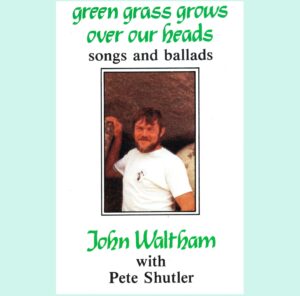
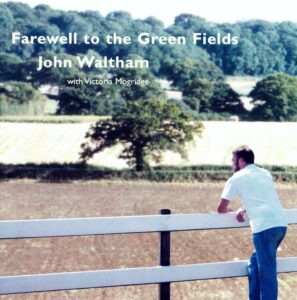
A Late Harvest brings together a collection of the unique and collected songs of the Dorset traditional singer John Waltham. Some of the tracks come from old recordings made by John which are now no longer available. In the process of putting together this album it was found that several of the CDs tried of Farewell to the Green Fields were no longer playable and the cassette Green Grass Grows over our Heads had to be repackaged before it could be recovered. Because of this, the complete version of both albums have been put up here on the WildGoose website for download. We chose to use the old recordings, as well as some new recordings, so that John’s voice can be heard as it has matured over the years.
This recording has been made possible by a generous donation made by the Sarah Morgan Foundation www.sarahmorganfoundation.org Sarah was a great personal friend and a lover of traditional music and I am pleased that this album could be made in her memory and is supporting the things she loved.
The 2 letters at the end of each track description denote where they come from :-
Green Grass Grows Over Our Heads 1992 cassette – GG;
Farewell to the Green Fields 2003 CD – FG;
Deep Waters 2022 CD – DW;
and new recordings made in 2026 at WildGoose Studios – NR. ………………………….. Doug Bailey
Songs from Dorset and Somerset Singers
From the time in my teens when I first started singing the songs that I’d picked up on the farm I’ve always enjoyed the process of learning songs “from the horse’s mouth”. Whenever I’ve come across older singers, I’ve done my best to hear what they’ve carried with them
All the singers from whom I picked up the songs were pleased (and sometimes surprised) that I should want “all that old stuff” and were generous with their time – especially back in the late 60s and 70s when they had to sing something several times over so that I could get it all written down. Once I got a cassette recorder life became easier. I know I should have pumped some of the singers for more songs, but time wasn’t always on my side then, and now it’s too late. But I have many pleasant memories of visiting total strangers (often on a motorcycle, a pleasure in itself around our beautiful part of the country) who subsequently became good friends, and for that I’m eternally grateful………………… John Waltham
Song Notes
Caroline and her Young Sailor Bold A fine song from Bill and Norman House, and a great favourite of Norman’s. He hardly ever sang in public until after his father’s death, and (as with many of these songs and singers) his presence is nearly palpable when I’m singing his songs. – FG
The Banks of the Sweet Dundee This came from “Uncle Albert” – I never knew his proper name – who was living with his niece at Heavens Gate, near Curry Rivel. He had a substantial repertoire of songs, many of them widely sung in the area, but this was the one that I liked best. A classic piece of Victorian melodrama! – NR
Forty Five Miles From my dear friend George Withers’ repertoire. He and my mother were both in a wartime Somerset Young Farmers concert group, and he and I travelled many miles together to singing events in the UK and Ireland. He was probably our last direct connection with some of Cecil Sharp’s informants. – NR
Lord Bateman Strictly speaking, I didn’t learn this directly from a singer. Many years ago, Bob Patten sent me a photocopy of a small collection made around 1923 by Phyllis Marshall, which included this version from Mrs Nation of Ruishton. At that time, my family had been farming at nearby West Monkton, so I asked my Uncle John whether he had any memory of such a person. He remembered “a song about some feller going to Turkey and being put in prison”. So I had to learn it. – NR
Corduroy I only met Charlie Wills a couple of times; at the Yeovil Folk Club and, a couple of weeks later, at his daughter’s home at Ryall, near Bridport. He had a spark in his eye and an eccentric singing style and happily sang a few songs for me (I still have the bits of A4 paper with the words of Brennan on the Moor and Corduroy). I’ve always enjoyed humorous songs, and most of the older singers I’ve known had a stock of them. – NR
The Merry Beagles Some distant relatives were leaving the farmhouse near Ilchester they’d lived in for six generations, and the words of this hunting song were discovered in the attic, together with a graph-like set of lines to indicate a tune. Pete Shutler kindly helped me to convert that into a singable state, and I sang it several times at Ilminster Beagle Hunt Suppers, which George Withers and I were often invited to sing at. The names mentioned indicate that it was written in the latter part of the 19th century by a whipper-in. – NR
The Iron Door Bill House and his son, Norman, always referred to this one as Cruel Father and Affectionate Daughter – a bit of a mouthful, but it’s a lovely song which seems to have been widespread throughout the British Isles. Norman often sang it at sessions in Eli’s, Huish Episcopi and I just absorbed it. – FG
The Lady and the Grenadier My Granny, who came from the Quantocks, was the other person who sang to me as a child. She had snatches of lots of songs, innumerable little rhyming ditties, and lots of old stories which she told to my brothers and I. This was, I think, her only complete song and she didn’t sing it to the air used here, which came later from the Yetties. – GG
The Trampwoman’s Tragedy Not traditional, but this powerful Thomas Hardy poem evokes the landscapes and places of his beloved Dorset and Somerset so vividly that I can visualise all the tragic action that pervades this ballad-like disaster every time I sing it. – FG
The Social Hop From Norman House of Beaminster, the last of a family line of singers that stretched back to at least the middle of the 19th century. Norman told me there was another verse that he had forgotten, which I found in one of his notebooks, kindly loaned to me by his wife Rosemary some time after his death in 2017 – probably the last of Dorset’s traditional singers. – NR
The Outlandish Knight This is the first song I remember hearing. As a small boy, I used to ride with Tom Collard, the carter (we had carthorses until the early 60s), and he sang it to me often enough that most of it stuck. He had a few other songs, but the verses about the parrot were what attracted me to this one as a child. – FG
One Night As I Lay in my Bed is another one from Bill House and Norman (although Norman rarely sang it). The air’s unusual, the story’s a very satisfactory one, and the song demonstrates the House family’s embracing of all sorts of songs. – NR
Timothy Briggs Other versions are known as The Wooden -Legged Parson, but this song was always known to Bill and Norman House by the name of its other protagonist, and was always sung with relish and a glint in the singer’s eye. – FG
The Nobleman’s Wedding I already had an Irish version of this in the late 1980s when I came across Arthur Harvey and his son Bob, who lived near Cadnam in the New Forest. Arthur’s mother came from Todber in North Dorset and had known Joseph Elliott, from whom the Hammonds collected a virtually identical version. Arthur also had two different Barbara Allens, which I recorded but didn’t ever learn. – FG
Leaving the Land I’m not sure that this song fits this recording’s remit, but for me it says more than any other song I’ve ever sung. Written for me by Yorkshire farmer and singer John Greaves at a time when both of us were having to contemplate an almost unthinkable fate, its subject is still disturbingly relevant. – FG
The Prison Across the Way Les Bowe, a Sherborne man, had this from his Mother, who would sing it to her large family while doing the washing. Les told me there were more verses that he couldn’t remember. Its wry description of what must have been a real event paints a vivid picture of the mindset of a working man in past days. The Swan Hotel mentioned in the first verse closed its doors in about 2015. – FG
Yarlington Wassail From Tom House of Yarlington (no relation to the Beaminster family), the last survivor of the village’s wassaillers, who sang it to me in the latter 1980s. the wassail itself had stopped in about 1931. As a cider maker, it appealed to me instantly for two reasons; there’s a Yarlington Mill cider apple variety, and the song’s all about the cider making process. In recent years I’ve been shown a longer version from the Dart estuary, of which Tom’s is plainly a cut-down version. – DW
Courting Round Dorset Another composed song (by Tim Laycock), which I heard him sing and knew I had to have it, since it’s the only “literary” reference I know of to Purse Caundle, my native home. Frequently requested by local people, whose comments and suggestions about omissions led to me adding an extra verse. – GG
Credits
The 2 letters at the end of each track description denote where they come from :-
Green Grass Grows Over Our Heads 1992 cassette – GG;
Farewell to the Green Fields 2003 CD – FG;
Deep Waters 2022 CD – DW;
and new recordings made in 2026 at WildGoose Studios – NR.
Accompaniments by:- Pete Shutler on Green Grass Grows Over our Heads (GG), accordion, concertina, bowed psaltry, whistle; Victoria Mogridge fiddle on Farewell to the Green Fields (FG); Helen English, Celtic Harp on Dark Waters (DW); Joe Sartin, guitar on the new recordings (NR).
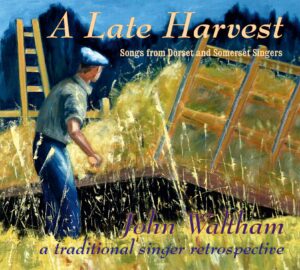
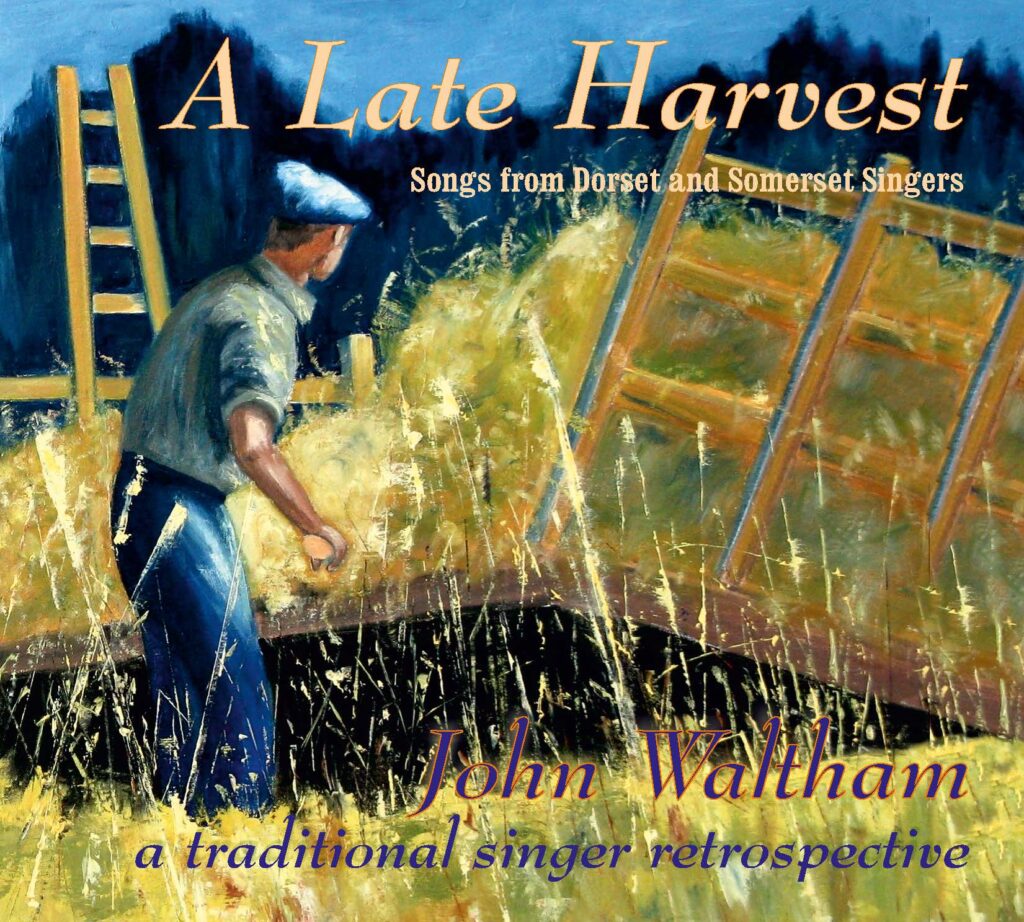
The original artwork is by Mary Waltham.
The unavailable complete re-mastered albums of Green Grass Grows Over Our Heads and Farewell to the Green Fields are available as downloads from the WildGoose website.
Reviews
Related Albums