All in Due Course

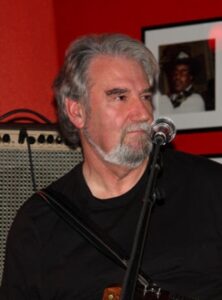
by Roger Watson
£7.99 – £9.99
Overview
INTRODUCTION
You cannot write a folk song; you can write a song in the style of songs which can be found in the folk song archives. You can also make your own version of a song which is already accepted as part of the folk canon.
In the sixty or more years since I first encountered English traditional songs and realised that their format could be a vehicle by which I could express things I wanted to say, I have used both of those approaches.
I grew up in a coal mining community in Nottinghamshire and I found that the stories which were told by my family and others could be made into songs which were accepted by the folk clubs in which I sang, filling, for me at least, a gap left by the lack of collections from my home area.
In the later part of the 20th century, I began making my own contemporary versions of traditional songs, maintaining the essence of the theme but bringing the language and setting closer to the experience of my own generation. I discovered that I shared this approach with Ashley Hutchings and together we began a project called “Public Domain” to encourage this approach, with performances and workshops with both adults and school students. Many of Ashley’s songs appeared on his CD “Street Cries” Topic 2001. Several of mine appear on this recording and others on my earlier CD, “Past and Present” Wildgoose 2009.
All the songs here were inspired by my acquaintance with the English tradition. I firmly believe that tradition is a fluid and ever evolving form, so these are not to be taken as set, definitive versions. Indeed, many of the singers here have made their own changes to the lyrics and melodies with which I supplied them, as well as creating their own arrangements. I heartily encourage any singers who learn them to do the same!
Roger Watson,
Click to hear samples of the tracks
1.Tides: Patakas
I have always liked the tune of “Just As The Tide Was Flowing”, and always thought that the idea of constant change, like the tide, was worth developing. This song is the outcome, retaining a few lines from the old song. Joe Sartin: vocal, guitar; Will Sartin: mandolin.
2.The Manchester Angel: Sarah Matthews and Doug Eunson
The story of a soldier’s girl wanting to follow him into battle is a common one. This version, first learned from the “Penguin Book of English Folk Songs” is here reset in the context of the Afghanistan war of 2001 onwards. Doug: vocal; Sarah: fiddle.
3.Black Cloud: Keith Kendrick and Sylvia Needham
An anti-war song built on the shanty “Haul Away, Joe” and using some lines from older versions of that song. Originally made in the 1990s during the Kosovo conflict, verses have been added in the light of more recent events. I invite you to add your own….. Keith: vocal, anglo concertina; Sylvia: vocal; Sound Tradition: chorus vocals.
4.Back to the Kitchen: Lynn Heraud and Pat Archer
Written as one of a cycle of songs for “Steeltown”, an oral history play by Rupert Creed for Remould Theatre, Hull, in 1988, the song is based on the words of Jessie Fowler who went to work in the steelworks during the Second World War, when her husband was conscripted. Lynn: vocal; Pat: vocal, guitar; Gill Redmond: cello.
5.Nottingham Miners: Brian Peters
Inspired by a story in a local North Nottinghamshire newspaper in the late 1970s, the verses are set to the American fiddle tune “Frosty Morning”. After the events of 1984, it was no longer viable to sing the first line of the chorus, for a few years. Brian: vocal, melodeon, guitar.
6.John Kanaka: Keith Kendrick and Sylvia Needham.
An update of an old shanty about working conditions, which took on a new direction after the parliamentary expenses scandals of the early 2000s. Keith: vocal, anglo concertina; Sylvia: vocal; Sound Tradition: chorus vocals.
7.Catherine Shaw: Sarah Matthews.
With its story of the female disguising herself as a man to gain admittance to an exclusively male occupation, this song joins the countless “Female Cabin Boys” and “Female Drummers” of the traditional canon. This track is dedicated to the memory of Jo Day. Sarah: voice, Doug: tan tan.
8.The Navvy’s Tombstone: Roger Watson (recorded live, 1983)
From the mid 1960s onwards, there have been threats to close the Settle to Carlisle railway line, and to remove from the landscape structures such as the Ribblehead viaduct, which stands as a memorial for the hundreds of navvies who lost their lives in its construction. Industrial heritage is more than just infrastructure. This recording was made by Trevor Curry in the Springfield Arms, Brighton. Roger: vocal, melodeon.
9.When This Old Hat Was New: Jim Causley
In 2000, I wrote an additional verse to an archival version of this song. The themes of the other verses remain relevant and in recent years I have remade the whole song to express in my own terms how I have seen changes in society take place Jim: vocal, piano accordion.
10.New Oysters/ Watercress-O: Sound Tradition.
Sixty years ago, my grandmother told me about the watercress seller who used to cry his wares in the street where she lived in the years after the First World War. Taking the street cry as a chorus, I began making a song. Some weeks later, my mother told me that the watercress seller went out of business during the strikes of the early 1920s, giving rise to the rest of the song. Sound Tradition have recognised that early origin by arranging the song together with an arrangement of other street cries made by Thomas Ravenscroft in the early seventeenth century. Vocals: – Linda and David Bartlett, Catherine Kendal, Moose Rosser
11.Spencer: Keith Kendrick and Sylvia Needham
I had considered making a contemporary version of “Spencer the Rover” for many years, when the final impetus came in 2010 from Brian Peters, who invited me to contribute it to a workshop he was leading at Chippenham Festival that year. Sylvia: vocal; Keith: English concertina; Gill Redmond: cello
12.Thomas Handley: Moose Rosser.
A story in a local North Nottinghamshire newspaper in the early 1970s, gave the inspiration for this song.
13.Barleycorn: Patakas.
The traditional song about the making of beer, using the tune sung by “Shepherd” Hayden of Bampton, but with the lyrics more in line with modern practice. Joe Sartin: vocal, guitar; Will Sartin: mandolin.
14.The Girl With the Blue Dress On: Lynn Heraud and Pat Archer.
In 2008 – 2010 I undertook a project called Age to Age, in a number of areas of Bracknell, funded by Bracknell Forest Borough Council. I worked with story teller Janet Dowling, who went to care homes and day centres to gather reminiscences from the residents or members. She then told selected stories to yr 5 pupils in nearby schools, with whom I led workshops to create songs, using traditional tunes. When this story emerged, of Muriel, who had gone dancing in a blue dress, the choice of tune was obvious, and the 9 and 10 year old pupils of Sandy Lane Jnr School created lyrics in a few lunchtime workshops. The song needed very little further development to make it suitable for an adult voice.
Lynn and Pat: vocals.
15.Night Visiting Song: Sound Tradition.
I wrote this song in 1967 on returning home after a year of study at a German university. It takes its narrative format and many lyric ideas from a number of traditional “night visiting” songs, such as “The Grey Cock” and “I’m a Rover”.
Linda, David, Catherine and Moose: vocals.
16.Lovers’ Leap: Brian Peters
Many stories exist of young people frustrated in love choosing to die by throwing themselves from high rocky places of which there are many in the Peak District of Derbyshire. But in this tale which was told in the vicinity of Buxton there is a different outcome, as the eloping lovers escape to get married in Peak Forest, where the church had a dispensation for marrying without the reading of banns and consequent delay. The tune is taken from the traditional ballad “Cawsand Bay”.
17.Lay the Bent: Sarah Matthews and Doug Eunson.
In the older versions of this ballad, the questions which are the central part of the story are what the young woman must answer correctly to be granted the status of “wife” by the man. This context was viable in former times, but I believe it distracts from the deeper meaning which I feel that the song holds. In all versions, the questions seem impossible if viewed from a completely empirical, left brained point, but with the application of intuitive, right brained thought, they are answerable. So, for me, this is not about marriage, but about the logical and intuitive parts of our brains working together.
Sarah: vocal, fiddle; Doug: melodeon; Iqbal Khan Pathan: tabla.
18.The Lights of Home: Sound Tradition.
I began making this song in May 1995 on a 14 hour flight from London to Santiago, Chile. It uses lyric ideas from the traditional songs “Adieu Sweet Lovely Nancy” and “Swansea Town”, both of which combine the theme of the departing traveller with the symbolism of life as a sea voyage. Sung here to the tune of “Adieu Sweet Lovely Nancy”, it also fits to “Swansea Town”. If you choose the latter, you may have to write a chorus!
Linda, David, Catherine and Moose: vocals.
19.Dawn Chorus: Roger Watson and Mike Draper (recorded live, 1984)
This is my only song which uses the verse and middle eight format, rather than the traditional verse and chorus structure. The song was recorded live at a Roger Watson and Mike Draper gig, by Ted Power at the Springfield Arms, Brighton, and the cello was added in the Wildgoose studio in 2025, recorded by Doug Bailey.
Roger Watson: vocal, melodeon; Mike Draper: electric guitar; Gill Redmond: cello.
Reviews
Related Albums

