Fortyfived

by The Old Swan Band
£9.99
Overview
This link will take you to a Youtube video containing a sample of all the album tracks with some band photos old and new. https://youtu.be/wykDiEZ4vjw
Fortyfived is a collection of dance tunes having roots in Ireland, America, Scotland, Sweden, Denmark, Quebec, Australia, Germany and of course the band’s home country – England. Carefully amassed to celebrate the band’s 45th year, it is a collection delivered in the inimitable style that the band has developed over decades of being at the forefront of ‘English’ folk dance music.
Over that time we’ve discovered that some of the ‘English’ music we play actually comes from somewhere else and conversely, some of the music from elsewhere that we’ve adopted started out in the publishing houses of London. The oft quoted Music knows no boundaries is a phrase which The Old Swan Band continually abides by.
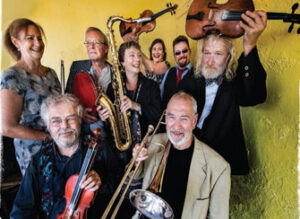
Johnny Adams The Old Swan Band
Martin Brinsford: Harmonica, percussion, feet.
Fi Fraser: Fiddle, hammer dulcimer
Paul Burgess: Fiddle
Flos Headford: Fiddle
Jo Freya: Saxaphones, whistle
John Adams: Trombone, fiddle
Heather Horsley: Piano keyboard
Neil Gledhill: Bass sax
Formed in 1974 as ‘The Cotswold Liberation Front’ it quickly became the Old Swan Band, named after a Cheltenham pub. Based in and around Cheltenham, it was one element of the new liberation movement for English music, a hint of a tidal reverse against the flood of English musicians who played Celtic music and ignored or were ignorant of the treasury of English tunes that existed not only in written form but also as a living tradition. Originally melodeon led (by Rod Stradling), a major sea change occurred in 1982 when Rod and Danny left the band. Considering them irreplaceable in their roles, the decision was made to go for an all fiddle line up. Whilst the Stradling’s name will always be synonymous with the band, the fiddles created another unique sound, the one you have here delivered by founder member Fi, now joined by the formidable talents of Paul Burgess and Flos Headford, leaders in the field of English fiddling. Jo Freya continued to play whistle and sax but the brass section was consolidated when John Adams joined on trombone. Heather Horsley took over the piano stool and Neil Gledhill was press-ganged into the band playing the rarely heard bass sax.
Alongside the predominance of Celtic tunes, the style of English barn dancing was becoming increasingly complex with dancers walking or even running rather than stepping. In answer, Old Swan’s band style was deliberately slow in an effort to encourage dancers to dance. The band was criticised greatly by less tolerant members of the English Folk Dance and Song Society for ‘playing the wrong tunes to the dances, playing too slow, changing tunes, using melodeons instead of proper instruments like accordions and worst sin of all, using brass instruments’. Despite these ‘sins’, the band has survived still plays dances in their distinctive style.
Rumours that occasionally surface about the band’s demise are greatly exaggerated and Old Swan now enters its forty-fifth year presenting here the 2019 version of its English Dance Music. We hope that the magic influence of those early Swan Band pioneers still shines through and that the playing of present members brings a tap to your foot and an inclination to dance.
- Going to the Well for Water/ Kings of Kerry
Also known as The Kaiser and as Denis Murphy’s Slide, Going To The Well For Water comes from the upland region in Munster known as Sliabh Luachra and has been recorded by many notable musicians including one of our favourites, Julia Clifford. Similarly a slide (12/8), Kings of Kerry was composed in 1989 by Mike Scott, Sharon Shannon, and Steve Wickham and according to Mike Scott named in tribute to Cooney and Begley, veritably the “Kings” of Kerry (and Irish) music.
- Dancing Dustman/ Louis James Quadrille
The two-step Dancing Dustman was composed by Perth-born multi-instrumentalist and dance band leader Felix Burns and was popularised on 78rpm records by Peter Wyper (1915) and Jimmy Shand Senior (circa 1950). A two-step was an American import popular in the early 20th century, and was a predecessor of the fox-trot.
Louis James Quadrille was played by a Louisiana Street Band from an important recording made by one of our early mentors, Reg Hall, showing the type of music played early last century as the New Orleans-style public bands morphed from military to dance and jazz.
- Bälter Svens Paradpolkett
Written by Olle Moræus , this tune owes a lot to the polka Jenny Lind, named after the famous 19thC opera singer known as ‘The Swedish Nightingale’. We learned it from the 2006 album BAO På Turné by the Benny Andersson Orkestra, led by the former Abba singer.
- The Mudgee and Rocking Schottisches
Nearly every Australian traditional musician had a ‘Mudgee Schottische’. They were sometimes similar and sometimes not. This one comes via Warren Fahey’s Bush Orchestra. Mick Murphy of Northwood, Sydney passed his version of The Rocking Schottische to his son Bill, who played it to collector John Meredith in the early 1980s. The Rocking Schottische itself could be a really good dance but nobody seems to know how it’s done.
- Jimmy Duffy’s Barn Dance Nos 1 & 2
Jimmy Duffy’s…This set is sometimes known as Eddie Duffy’s. Jimmy was a box player from Fermanagh and Eddie was his flute playing brother.
- The Swedish Waltz/ Stan Treacy’s Very Particular Waltz
The Swedish Waltz came from a cassette tape copied for Pete Coe many years ago by a friend and then mislaid– it might have been by The American Spellerman Trio and goodness knows what the title is.
Stan Treacy was a well-documented fiddler born and raised in Limerick, New South Wales, Australia. He played his first dance aged thirteen. His Very Particular Waltz was collected by Dave deHugard further south in Crookwell, NSW
- Little Red Wagon/ Art Wooten’s Quadrille
We first came across these tunes in the early seventies, when Dave Haines introduced us to an amazing double LP called ‘The Old-Time Fiddlers Repertory’ featuring field recordings made by R P Christesen, fabulous fiddle playing and full of the sort of tunes we could relate to – especially the quadrilles. One of his main sources was Robert E. (“Uncle Bob”) Walters from whom he recorded a large number of tunes – one of the only recorded fiddle players of his generation from Nebraska. Many of these tunes can be found in Christesen’s book of the same name.
Originally called The Little Red Barn Quadrille, and consisting of four parts, Christesen recorded this version from Charles Larson, Bob Walters’s cousin who was visiting from Oregon. Taking a cue from our colleague Roger Grimes, we have abandoned the first two sections.
Art Wooten’s Quadrille is from Bob Walters. Art Wooten was the first fiddler to play with Bill Monroe’s Bluegrass Boys and came from Allegheny Co. in the extreme Northwest of North Carolina.
- Tyskan/ Stjuls på Källhagen
Tyskan is a German schottische learned from the group Frifot which includes our old friend Ale Möller. Tyska is the Swedish adjective meaning ‘German’. Tyskan could be ‘German Woman’ or possibly a contraction of Tyska Polskan’ – ie. German Polska, or possibly it just means The German One’ Thanks to Lars Fahlin for advice. We love a mystery. Stjuls på Källhagen was written by Per-Erik Moræus of the band Orsa Spelmän and appears on their album Ödra.
- Quadrille de le fin de l’an/Partie de Lanciers
Quadrille de le fin de l’an is a 48-bar jig written by a friend of Paul’s, the great Québécois flute player and researcher Jean Duval, who also co-edited the book of tunes and stories by another great friend of the band – Packie Manus Byrne.
Our version of Parties de Lanciers came from the playing of Philippe Bruneau from a recording made in 1980 and released on the CD Hommages Vol 1. We are still waiting for Vol 2!
10.Sonny’s Mazurka/ Druttjinkeilleitjen/Andrea’s Swedish Mazurka
This set came via Chris Partington’s sister-in-law who gave him a workshop sheet from the Brigg Fiddle Club in Lincolnshire. Sonny Brogan’s Mazurka, which the band have recorded twice before back in the days of vinyl, goes under a variety of names and its origin is unclear. Would you believe, our version comes from the playing of Sonny Brogan. The workshop sheet named the second tune as Drukken Karl Ecken but American fiddler and acknowledged authority on Scandinavian traditional music Andrea Hoag gave us the correct title which translates as ‘Drunken Man’s Tune’. She was also the source of Andrea’s Swedish Mazurka but she didn’t write it and is uncertain of its origin so it is labelled ‘trad’.
- Batt Henry’s Barn Dance
This tune was recorded in New York in May, 1932, by South Sligo fiddlers Paddy Killoran and Paddy Sweeney. The original recording can be heard on the Irish Traditional Music Archive web site but this version comes from legendary Leitrim born fiddle player Ben Lennon.
- Moss-trooper’s Polka/Billy Ballantine’s Reel
These come from Northumbrian piccolo player Billy Ballantine, from Wark, North Tyne who was recorded by Peter Kennedy in 1954. Moss-troopers were 17thC bandits, (similar to the earlier ‘reivers’ ) who roamed the border country between Scotland and the northern English counties of Northumberland and Cumberland during Cromwell’s time. Billy Ballantine’s Reel bears some resemblance to Angus Fitchet’s tune ‘J.B.Milne’ which appeared on our 2011 album ‘Swan for the Money’.
- Road To The North/ Travellers’ Joy
“The Road to the North” is by Alistair Anderson, from his seminal CD “Under Steel Skies”
The tune Travellers’ Joy came to us via Keith Holloway who credits it to John Kirkpatrick’s CD “The Duck Race”. It was written by Shropshire dancer Janet May to accompany a morris dance by the team, Martha Rhoden’s Tuppeny Dish
- Little Diamond/The Tournemore Polka/The Maids of Ardagh
This set of polkas with its unusual take on Little Diamond was first recorded by concertina player Michel O’Heidhin, who said he had played it whilst a member of the Brosna Ceilidh band. The second tune has numerous names which include The Tournmore Polka (spelled several different ways) and Johnny O’Leary’s (because he played it). The third tune , The Maids Of Ardagh is known in Scotland as I have a Bonnet Trimmed in Blue or Liberton Pipe Band (which is what Jimmy Shand Junior called it).
Reviews
Folk Radio UK – David Kidman
Just five years ago, The Old Swan Band celebrated its nominal 40th anniversary in style with the aptly punningly titled Fortyissimo. That CD proclaimed loud and proud from the proverbial rooftops the band’s lofty status, its long-assured place at the forefront of “English” folk dance. For, after all, the Old Swan Band were pioneers – instrumental (both literally and figuratively) in transforming and liberating the somewhat polite and over-decorous English country dance scene of the late-’70s through its full-on, punchy yet deliberately paced delivery and its defiant espousal and exposure of the largely unappreciated treasury of the English (as opposed to Celtic) tune repertoire (indeed, the band’s original name was The Cotswold Liberation Front!). The Old Swan Band’s remit was to encourage dancers once more to actually get out there and dance! And nobody can deny that the band’s influence has stretched on through the decades, with many a dance-oriented outfit forcing a radical re-evaluation of method and practice.
The Old Swan Band’s presence, then, has somehow always been strongly felt – even when for 20 years in the middle between 1983 and 2004 they made no recordings! This hiatus followed a crucial early shift from a melodeon-led to the fiddle-led band dynamic, but in most other respects the Old Swan Band’s lineup has remained quite constant over its tenure, especially considering (or perhaps notwithstanding) the amount of promiscuous overlap of membership between the Old Swan Band and sundry other bands. And yet there’s never been any feeling of artistic compromise (or indeed undue competitiveness) from within or without the ranks, the individual musicians concerned displaying the easy interaction and trading-off that comes of years of this kind of working together on the stand.
At the risk of re-stating the known obvious, the tried-and-tested Old Swan Band complement features a distinctive triple-fiddle front line (Fi Fraser, Paul Burgess and Flos Headford) which is augmented by saxophone and whistle (Jo Freya) and bass sax (Neil Gledhill), the brass contingent then being rounded off by John Adams’ trombone; this joyous little ensemble is reliably underpinned by the solid drive of Heather Horsley’s piano keyboard and Martin Brinsford’s unmistakable, signature wonderfully animated percussion that truly seems to know no rest!
It might seem an act of underselling to describe, albeit with all due honesty, the band’s 45th-anniversary recording as more of the same kind of spirited mixture that characterised its 40th. But in all fairness, this kind of utterly refreshing – yes, most “fortyfiving” – dose of “plus ça change” is just what the doctor ordered, and with all Old Swan Band hallmarks very much present and correct and very much alive and well, there can be no cause for complaint from any quarter. As ever, there’s plenty vitality, the band are having a ball and the listener is carried along at whatever tempo feels right. It’s uplifting, jolly fun all the way, tempered with an easy musicality that doesn’t patronise, and splendidly well recorded.
It’s fair to note, however, that, due to the constant opening-up of research possibilities and resources to hand, discoveries are increasingly being made to the effect that some of the “English” music the band plays actually originates from somewhere else (the converse is also true by the way), and so the broad corpus of available repertoire encourages an ever-all-encompassingly eclectic approach to tune-marrying. And like its predecessor, this CD contains a significant proportion of tunes that lie outside the ambit of well-trodden dance music, including several that I’d not encountered before – always a good sign. The instrumental balance and textural dynamic is faultlessly observed and varied, yet there’s also many an element of delightful surprise in the incidental detail too – as when changes are rung with the incorporation of hammer dulcimer (Fi) on the delicious waltz set (track 6) and harmonica (Martin) on Batt Henry’s Barn Dance, the slightly-Jenny-Lind-soundalike Bälter Svens Paradpolkett (track 2) and the contrarily-named German schottische Tyskan (which the Old Swan Band learned from Ale Möller’s band Frifot).
Elsewhere, listeners’ feet can’t fail to be uprooted by the thoroughly infectious rhythms of the 48-bar jig-quadrille (track 9), and the suitably sprightly Dancing Dustman two-step (a Jimmy Shand favourite) – to name but two selections. And even better-known tunes like Sonny’s Mazurka and the sounds-familiar-but-probably-isn’t pair of Northumbrian tunes (the polka and reel at track 12) receive an unerring pacing that fair gives them a new lease of life. It’s irresistible – and you just can’t put a foot wrong with the Old Swan Band. While it’s another good sign that after 53 minutes of “English dance music from everywhere” (danses sans frontières) you come to the end of track 14 with The Maids Of Ardagh polka and you’re left wanting more! So just play it again!
Onward and upward then – to the Nifty Fifty?
EDS – Chris Metherell
Is it really 45 years? It can’t be. I can well remember the stir which the band caused back in those early days. We had heard nothing like it. English music played with such vitality and excitement it really made you want to dance. They gave English music (as recalled by musician Dan Quinn) a much needed “good kick up the a**e”.
Of course, the band has moved on, members have come and gone, but the style and intent are still there. The sleeve notes are as good as ever. This CD features tunes with widely differing roots, from Scandinavia to Scotland and America to Australia, and, of course, England.
From the first track two Kerry slides you know you’re in for a treat. My favourite has to be the Swedish polkett. I’ve never heard a polkett played quite like that before and it was just astounding. I dug out their first offering, No Reels, from back in 1977 and wallowed in some nostalgia. The sound is different but the band’s desire to push the boundaries remains just the same.
Back in 1977 there was no better band. I have to tell you that the same is true in 2020.
Essex Folk News – Malcolm Woods
Formed in 1974 as ‘The Cotswold Liberation Front’, the band quickly changed its name to The Old Swan Band, named after a Cheltenham pub. Originally melodeon led (by Rod Stradling), it transformed into a fiddle band 8 years later and this plus the
addition of a strong brass section is what gives the band its unmistakable sound.To celebrate the band’s 45`” birthday it has produced yet another album of a wonderfully eclectic mix of tunes, all played with their usual exuberance and precision that makes for such toe tapping listening. There are 28 tunes in all on the CD spread over 14 tracks and what a rich mix they are both in terms of rhythms and sources.
The album opens with a lively pair of jigs from Ireland, Going to the well for water and Kings of Kerry, and from there the band travels to America, Scotland, Sweden, Denmark, Australia and Quebec. There may be those who complain about a lack of ‘English’ tunes but for this listener one of the band’s great strengths is that from wherever a tune is sourced, they give their music what I can only describe as a very English sound. Listen, for example, to Balter Svens Paradpolkett, a wonderfully bouncy three part tune from Sweden but sounding very much as if it had been sourced from an obscure English tune book. I know I am great fan of The Old Swan Band but I really cannot find fault with this celebratory album.
There are just so many good tunes to enjoy. When the band’s first album, ‘No Reels’ first appeared, Jo Freya remembers going to sessions where musicians played the entire album from start to finish. That may not happen with this album but it will surely not be long before some of the titles from this CD start appearing in music sessions. Recommended.
Shire Folk – Barry Goodman
Celebrating forty five years of playing music for dancing, the Old Swan Band’s latest CD has all the hallmarks of style, instrumentation and tempo that have kept the band at the forefront of English ceilidh bands for so many yea. s.
Formed in 1974 as The Cotswold Liberation Front, the band’s intention was to put the stepping back into English folk dance, using tunes learned from musicians who had played them for dancing all their lives. The band’s personnel has changed over the years and the repertoire has expanded to include tunes from Europe and North America, but the principles are still the same play great music for great dancing!Led by the three fiddles of Fi Fraser, Flos Headford and Paul Burgess, the distinctive ‘oomph’ comes from the brass section Jo Freya on saxes and whistle, John Adams or) trombone and Neil Gledhill’s bass saxophone. Completing the line up are Heather Horsley (piano keyboard) and Martin Brinsford (harmonica and percussion). The band still includes four original members and, although criticised in their early days by the folk dance’establishment’for playing the ‘wrong’ tunes, too slowly and with brass instruments (for goodness’ sake!), they are still playing joyfully for dances forty five years later.
The tunes include the expected mixture of polkas, jigs, hornpipes, schottisches and waltzes, most of which are the results of the band’s extensive research into dance music, and are an eclectic mix of English, Swedish, Scottish, Danish, Australian, Quebecois, German and American tunes. The common denominator is that it’s all marvellous dance music, so here’s to the Old Swan Band forty five years young and still with a lot to say!
Around Kent Folk – Vic Smith
It is at times like these that reminders are given about just how long an involvement it has been. The Old Swan Band were booked at the appear at the Lewes Folk Day on the same year as their first album No Reels appeared and that was in 1976. Memory speaks of two schoolgirl aged members, Fi and Jo Fraser. Amazingly, along with Martin Brinsford, they are still band members. Since Rod & Danny Stradling left after the first few years, the band became a fiddle driven band with Fi joined by Flos Headford and Paul Burgess. John Adams also plays fiddle but he alternates that with trombone. Heather Horsley’s piano and Neil Gledhill’s bass saxophone join Martin’s percussion in a punchy rhythm section in a line that has changed in many years.
This time they draw material from Germany, Sweden, Denmark, Quebec, as well as the more obvious USA. Australia, Scotland, Ireland and even England! It all goes into the Old Swan mincer and comes out as the most exciting English dance music that you are ever likely to hear or dance to.
There are no dull moments in the 53 minutes. All the playing is tight and exhilarating but a personal favourite would be what they have done to Alistair Anderson’s Road To The North. This is normally heard as a thoughtful, almost sensuous melody on his Steel Skies suite. Here is a really sprightly polka. Great! Why should superb tunes be restricted to just one interpretation?
Folk Northwest – Derek Gifford
This CD is a collection of dance tunes from Ireland, America, Scotland, Sweden, Denmark, Quebec, Australia, Germany and England in celebration of the band’s 45th year. Right from the very first track, Going to the Well for Water/Kings of Kerry, it’s obvious that we have here a very professonal outfit who lilt along effortlessly and cohesively.
This is not, of course, all of the original band members after so long but nevertheless the experience and maturity of the present incumbents shines through. They are Fi Fraser, a founder member, on fiddle and hammer dulcimer who is joined on fiddle by Paul Burgess and Flos Headford. Jo Freya is on whistle and saxaphone and is joined by the trombone of John Adams to reinforce the ‘brass’ section. John also plays fiddle. Heather Horsley plays the piano keyboard and Neil Gledhill who was evidently ‘press-ganged’ into the band plays the rarely heard bass saxaphone. Finally, we have Martin Brinsford who is an excellent percussionist (no – not a ‘drummer’!) and also can be heard playing harmonica and tapping his feet on a few tracks.
There a number of fairly well known tunes on this album such as Dancing Dustman, The Swedish Waltz and Travellers Joy but the vast majority I’m sure will be new to most people. These include such esoteric titles as Balter Svens Paradpolkett, Tyskan, Stjuls Pa Kallhagen and Druitt Jinkeilleitjen. Try saying those after having a few drinks!
The whole album rattles along at a steady dancer’s pace which is important when you advertise yourselves as a ‘dance band’ funnily enough, despite criticisms of EFDSS in the past for playing too slowly!
There are full notes on the origins of the tunes and this is where I have but one criticism in that some of the notes are printed in black over a dark blue background which makes them difficult to read without a decent spotlight.
That said, this is a great album which will appeal to anyone in the folk music world who likes a good tune or two. I can’t wait for Radio Three to pick it up. It’s available from Wild Goose via their web site and is distributed by Proper Music Distribution.
Folk London – Paul Cowdell
In the early 1970s the English dance scene need¬ed a shot in the arm, and many young bands enthusiastically took up that challenge. Old Swan, now 45 years young, may be among the last bands standing of that wave, but they still play for the feet.
Old Swan wear that long history lightly. From an early melodeon drive sound they’ve long settled into a fiddle led outfit, with some well arranged brass backup. I’m generally cautious of saxo¬phones in English traditional music too easily over the top and out of place but Old Swan’s musicianship and arrangements really have this under control, and everything is directed towards the dance.
One thing that irritated early conservative critics was their insistence on playing slowly enough for dancers actually to step, rather than walk or run. With age this could sag into sedateness, but their playing still has an irresistible dancing lilt and drive to it.
The band serve up a wide ranging eclectic mix here. There are tunes from England, Ireland, Scotland, certainly; alongside interesting Austral¬ian. Quebecois, German, Danish and Swedish selections. It’s a tribute to the band that they’ve assimilated all of these quite comfortably into their own sound. There are unusual pieces alongside some rather more familiar tunes, but the whole thing glides along with a joyously self¬ contained delight.
Recommended.
Folking.com – Su O’Brien
The Old Swan Band, rightly lauded for its longstanding championing of English dance music, broke a 20-year recording hiatus in 2014 to mark its 40-year anniversary. Fortyfived, the band’s latest album, celebrates this continued survival across four and a half decades. Much like the dwarf’s axe, some of the band’s original parts have been replaced over time but The Old Swan Band still stands proud as a pioneer in its field.
And yet, as Fortyfived amply demonstrates, the concept of “English” music may not be quite what might once have been assumed. There is growing evidence of a much greater musical cross-pollination with other lands. Consequently, Fortyfived sees English tunes nuzzle up close with their Celtic, North European, American and Australian relations. It’s a genuinely free-trade community where borrowing and adaptation is not just tolerated but forms part of the fabric of the music itself. And, really, wouldn’t it be more surprising if that were not the case? Turns out there’s no point getting too flag-waving and parochial about it, after all.
Here, then, is music for dancing to with unselfconscious abandon at whatever name you give to your local knees-up. No doubt it has already been gracing dance floors throughout the festive period, for those sage enough to have caught its December release. But even in the cold comedown of January, it lights up the gloom with reels, quadrilles, waltzes, two-steps, polkas and more, in a dizzying gallop where the pace never lets up for a moment. These are tunes simply crying out for the foot-tapping, beer-flowing exuberant whirl of live performance.
Performances are as tightly dynamic as you might expect, insistently nudging the tunesets along. Particular mention must go to Martin Brinsford’s eternally restless percussion and John Adams’s sensitive trombone punctuation, underpinning the vigorous frontline fiddle triple of Flos Headford, Paul Burgess and Fi Fraser.
On CD while, of course, it’s possible to pick out all the instruments, get contemplative over arrangements and performances, it can feel as if the warmth and feedback of a live audience is missing from the mix. Nonetheless, Fortyfived delivers up its well-considered dance music without borders, all intelligently combined and arranged, and given with an unabashed, heartfelt joy. Exactly the kind of tonic we could do with right now.
The Living Tradition – Alex Monaghan
Topped and tailed with timeless Irish slides and polkas, the seventh (at least) album from this archetypal English dance band is a bit of a departure as it contains no English tunes at all. Not a single one! Perhaps the closest is Traveller’s Joy, a new piece from Shropshire composer Janet May, which has passed into the English session scene but seems to belong to the Welsh Border tradition with more than a hint of the Dark Celts. This jaunty tune follows three pieces from the Debatable Lands, where as any Northumbrian will tell you the music is definitely not English.
Scottish, Swedish, North American and Australian melodies fill the rest of Fortyfived, along with a couple more jewels from the Irish canon: Sonny Brogan’s Mazurka, a beautiful melody, and the swaggering Batt Henry’s Barn Dance from the 1930s heyday of New York Irish music. Marches, hop-steps, waltzes, jigs, and what passes for reels in English circles are all delivered with panache and with enough punch for the most demanding dancers. Somehow this eight-piece band has managed to combine contemporary finesse and musical tastes (minor keys, more notes, modern rhythms) with the distinctive 70s sound of shakers and tambourines and low brass – and it works perfectly, as shown by the packed halls and perspiring hordes at Old Swan Band performances.
The quality of Fortyfived in terms of mixing and musicianship is as good as ever, benefiting from modern recording techniques and many years of experience. The album title refers to the average age of the Old Swan Band, I’m guessing, or perhaps to the Sanatogen they add to their cornflakes these days. (Other vitamins are available!) Either way, there’s plenty of life left in the Old Swan yet, and this CD will delight both dancers and listeners who like their music lively and authentic, wherever it comes from
Tykes News – Mary Humphreys
If you haven’t got any Old Swan Band recordings then this review will
probably not be worth reading as it won’t change your mind. Read
something else.If you like dancing , or dance music or good tunes to play then this is
right up your street. Old Swan Band (now in its 45th year ) is still
going. Some of the original members are still there – yes – still there
and playing as well if not better. The Fraser sisters and Martin
Brinsford are there,the – wait for it! – hammered dulcimer played Fi
Fraser. Neil Gledhill with a bass sax gives a great rhythmic anchor.
Heather Horsley is one of the best keyboard players on the scene – she
does some solid driving rhythms and keeps the whole anarchic band
together. The tunes are played in the same rhythmical, steady, rackety
old way that became the mainstream style for English ceilidh bands so
many years ago when we were young.There are some interesting tunes that are not mainstream (yet!) which
come from varying traditions. Kerry/Munster slides start the CD, and it
finishes with a medley from Brosna Ceilidh band and Jimmy Shand Jr. In
between there are examples of
Quebecois/Northumbrian/Scandinavian/Australian/Irish/US tunes. Ones to
point out as special ( in my opinion) are the Swedish ones. The
Paradpolkett, track 3,and Track 8 from Orsa Spellman are excellent. I am a fan or Orsa Spellman and it is good to hear their tunes translated
into English ceilidh music. The Australian schottisches on track 4 I
could listen to on repeat for ever. It is also so good to hear a
recording of Traveller’s Joy, written by Janet May of Martha Roden’s
Tuppenny Dish played in a good rollicking ceilidh style. It is one of
the best tunes to come my way recently.As with all Wild Goose recordings, the CD is a delightful album
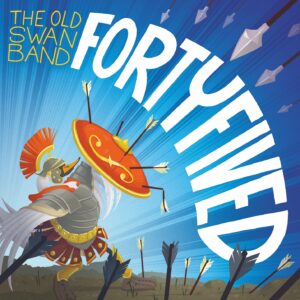
incorporating an apposite illustration by Katy Coope and encompassing
the professional production by Doug Bailey and John Adams. There isn’t a dud on the CD. It is worth buying if you like ceilidh music. If you feel that there is nothing good in the future to look forward to, then this
might help.
Related Albums